

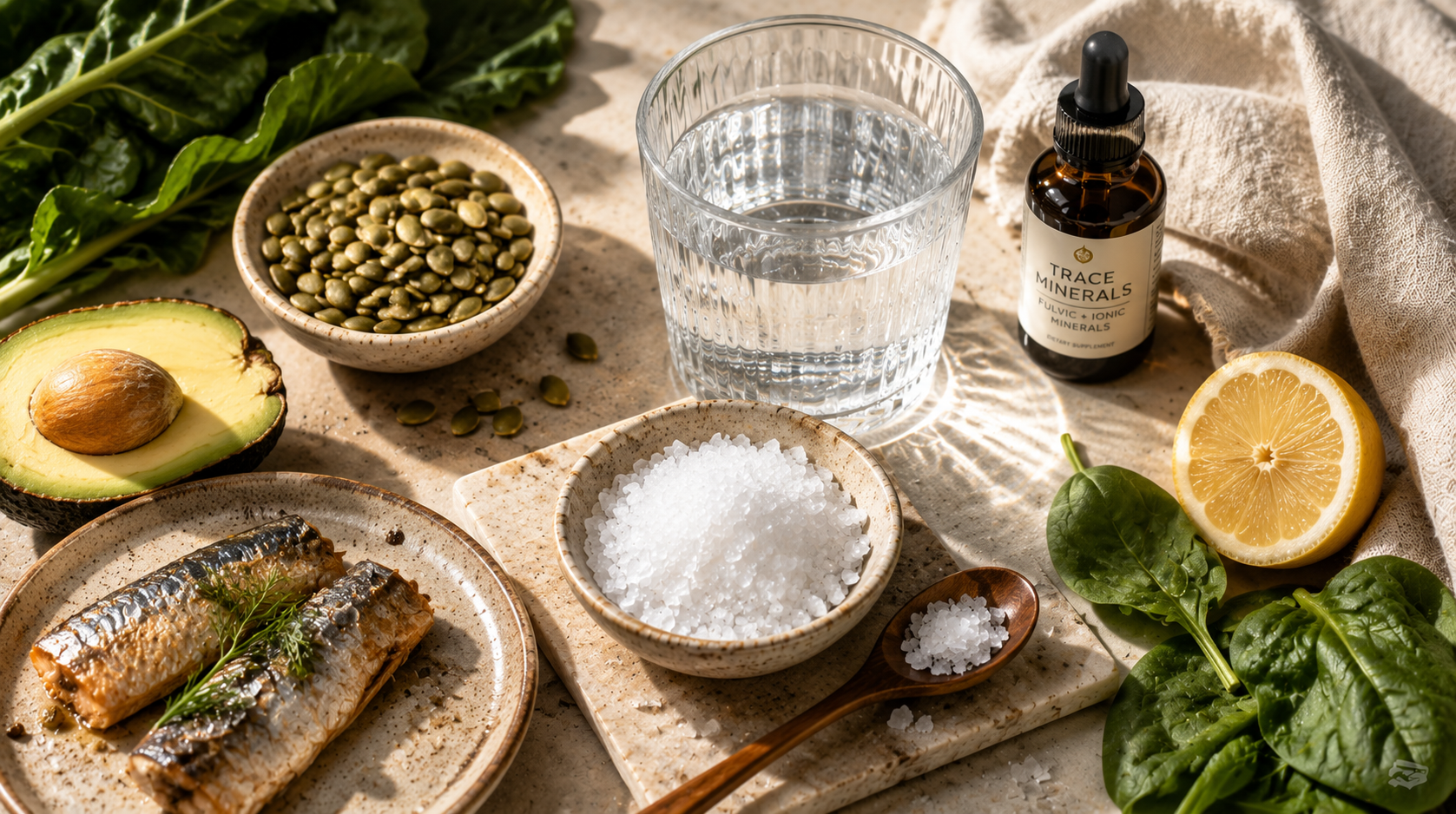
Most people have heard about electrolytes at this point. Sodium, potassium, magnesium… those conversations have become pretty mainstream. From sports drinks to hydration packets to wellness podcasts, electrolytes have officially entered the health conversation in a big way.
But there’s still a lot of confusion around what actually qualifies as an electrolyte… and what falls into an entirely different category: trace minerals.
While the two are connected, they are not the same thing.
And understanding the difference may help explain why some people still feel fatigued, depleted, foggy, or “off” — even when they’re drinking more water and adding electrolytes to their routine.
What Are Electrolytes?
Electrolytes are minerals that carry an electrical charge when dissolved in water. They help regulate fluid balance, muscle contractions, nerve signaling, blood pressure, and hydration status.
The primary electrolytes include:
- Sodium
- Potassium
- Magnesium
- Calcium
- Chloride
These minerals are especially important for:
- Hydration
- Exercise performance
- Muscle function
- Nervous system signaling
- Sweating and recovery
This is why athletes, people following low-carb or ketogenic diets, sauna users, and highly active individuals often pay closer attention to electrolyte intake. When we sweat, fast, exercise intensely, or lower insulin levels through nutrition changes, we can lose more sodium and fluids than many people realize.
For some individuals, simply improving sodium and electrolyte balance can make a noticeable difference in energy, headaches, muscle cramps, and overall well-being.
But electrolytes are only one piece of the mineral conversation.
What Are Trace Minerals?
Trace minerals are minerals your body needs in much smaller amounts — but that doesn’t make them any less important.
These include:
- Zinc
- Selenium
- Iodine
- Copper
- Manganese
- Chromium
- Molybdenum
- Iron (technically a trace mineral, though often discussed separately)
While electrolytes are heavily involved in hydration and fluid balance, trace minerals play broader roles throughout the body, including:
- Energy production
- Thyroid function
- Immune health
- Hormone production
- Antioxidant defense
- Nervous system regulation
- Recovery and tissue repair
In other words, these minerals may not get the same attention as sodium or magnesium, but they are involved in countless biochemical processes happening behind the scenes every single day.
And when intake or utilization is less than optimal, the body sometimes lets us know.

Why So Many People May Be Falling Short
Modern life is not exactly creating the ideal environment for optimal mineral status.
There are several factors that can potentially impact mineral intake, absorption, or utilization:
- Highly processed foods replacing nutrient-dense whole foods
- Chronic stress increasing nutrient demands
- Poor sleep and recovery
- Sweating more through exercise, saunas, or hot climates
- Filtered or purified water removing naturally occurring minerals
- Soil depletion affecting mineral content in foods
- Restrictive dieting or under-eating
- Digestive issues impacting absorption
That doesn’t automatically mean everyone is deficient. Health is rarely that simple.
But it does help explain why conversations around minerals — especially trace minerals — have become increasingly common in the health and wellness space.
For some people, inadequate mineral intake or imbalance may potentially show up as:
- Fatigue
- Muscle cramps
- Brain fog
- Low energy
- Poor recovery
- Weak nails or hair
- Feeling depleted or “off”
- Difficulty concentrating
- Changes in mood or stress resilience
Of course, those symptoms can have many causes, and minerals are not a magic solution. We don’t believe in oversimplifying health conversations at Hack Your Health.
But minerals are foundational. And foundations matter.
Real Food First
The good news? Supporting mineral intake doesn’t have to be complicated.
One of the best places to start is simply focusing on whole, nutrient-dense foods.
Some mineral-rich options include:
- Red meat
- Seafood and shellfish
- Eggs
- Leafy greens
- Sea vegetables
- Dairy products
- Nuts and seeds
- Bone broth
- Fruits and vegetables grown in healthy soil
For example:
- Oysters are incredibly rich in zinc
- Brazil nuts contain selenium
- Seaweed provides iodine
- Beef and liver offer multiple trace minerals
- Pumpkin seeds contain magnesium and manganese
Hydration also matters.
Many people are drinking large amounts of plain water while simultaneously sweating more than ever through workouts, outdoor activities, saunas, and busy lifestyles. In some cases, this can contribute to dilution of important electrolytes if minerals are not being replenished appropriately.
That’s one reason electrolyte support has become so popular.
Should You Supplement?
In some cases, people choose to explore electrolyte products or trace mineral supplements.
This can be helpful for certain individuals — especially athletes, people eating very low-carb diets, those with increased sweat loss, or individuals working with healthcare professionals to address specific needs.
But more is not always better.
Minerals work in balance with one another, and excessive supplementation can sometimes create unintended issues. For example, taking high doses of one mineral for long periods may potentially impact the absorption or balance of others.
That’s why it’s important to approach supplementation thoughtfully and ideally with guidance when needed.
The Bigger Picture
The conversation around minerals isn’t really about chasing another wellness trend.
It’s about recognizing that the human body depends on nutrients to function properly — and modern lifestyles can sometimes make that more challenging than it should be.
Electrolytes matter.
Trace minerals matter too.
And sometimes the biggest improvements don’t come from complicated protocols or extreme biohacks. Sometimes they come from consistently supporting the basics:
- Better hydration
- More nutrient-dense foods
- Prioritizing recovery
- Managing stress
- Spending more time paying attention to what your body is trying to tell you
Health optimization doesn’t always start with doing more.
Sometimes it starts with replenishing what’s missing.

Robin Switzer
Robin Switzer is the founder behind Hack Your Health, one of the largest health and wellness events in the U.S. After overcoming personal struggles with metabolic health issues, she turned pain into purpose by creating a trusted space where people can cut through the noise and misinformation in nutrition, fitness, and longevity. Blending science, education, and community, her movement has grown into an annual wellness conference featuring 60+ expert speakers, workshops, live demos, and a vibrant health expo—a hub for anyone ready to transform their health, optimize their wellbeing, and thrive at every stage of life.