

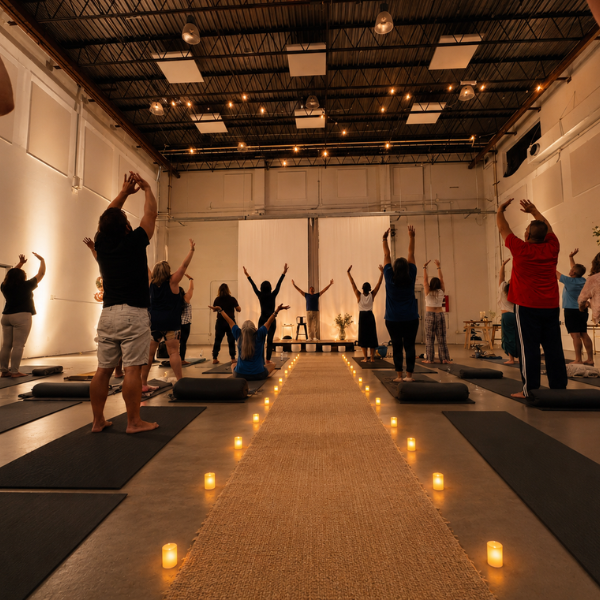
Why most stress advice misses the one system that controls how you feel—and how to train it in just a few minutes a day.
Guest Contributor Series
At Hack Your Health, we believe some of the best health insights come from practitioners who are doing the work every day. In our Guest Contributor Series, we invite trusted speakers, educators, and industry leaders to share their expertise directly with our community.
This week’s article comes from Michael Thomas, creator of The Vagal Method and founder of Plunsana. Michael has helped thousands of people better understand the connection between breath, the nervous system, and stress resilience. In this article, he explains why the vagus nerve may be one of the most overlooked pieces of the health puzzle—and how a few simple daily practices can help support your body’s natural ability to recover from stress.
——————
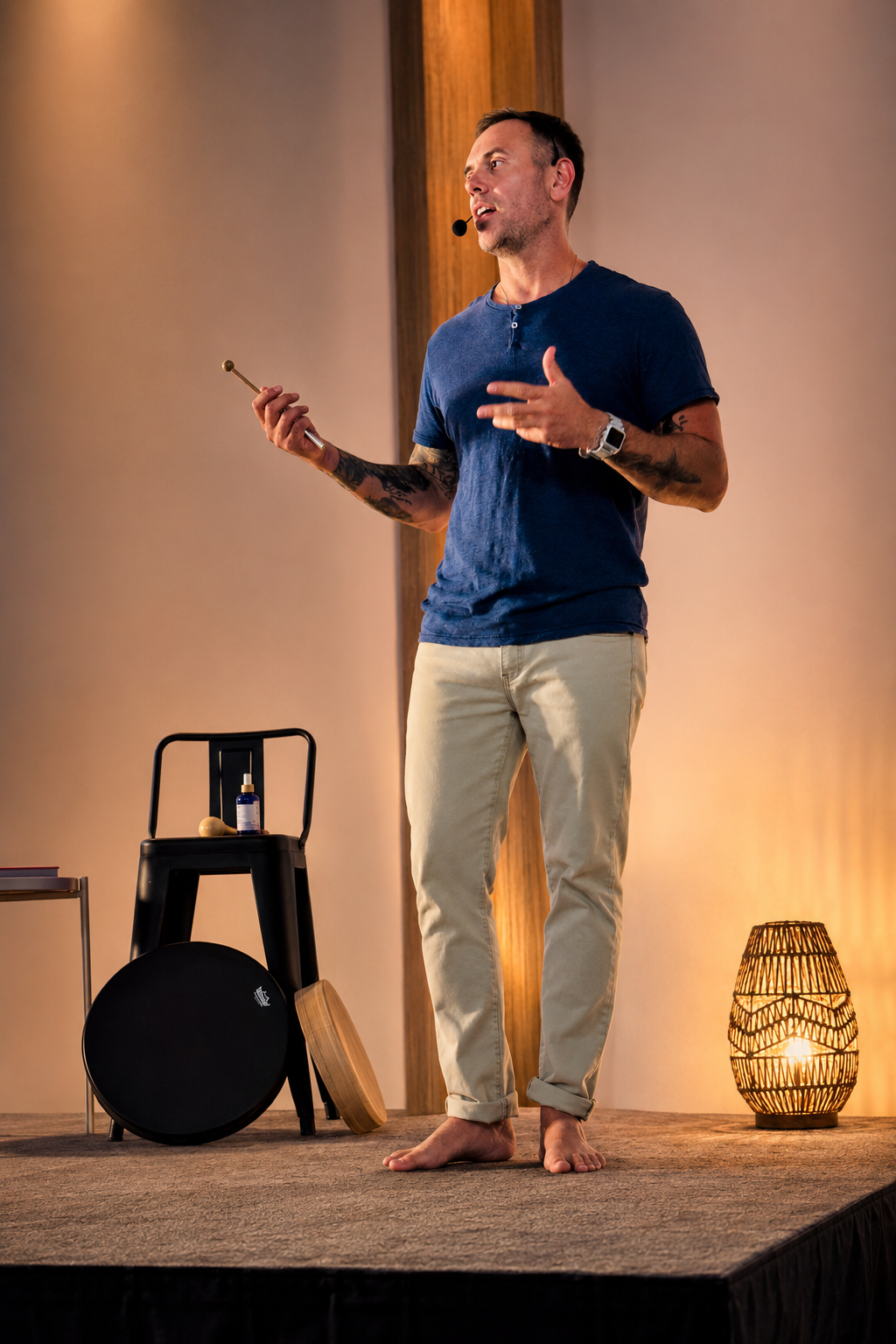
A few years ago, my heart started skipping beats.
I was deep into breathwork and cold plunges. I had spent more than four years as a Wim Hof Method instructor. I felt like I understood the body. Then out of nowhere I started getting heart palpitations, this fluttering in my chest that would show up at rest, for no reason I could name.
I went to the doctors. They ran tests. Nothing.
I stopped the cold. Stopped the sauna. The palpitations stayed. I felt anxious in my own body, and no one could tell me why.
Eventually I saw a holistic doctor. I told him the story. He put his fingers just under my sternum, pressed, and popped a hiatal hernia back down into my stomach. The hernia had been pushing up against my vagus nerve.
The relief was instant. Not “a few days later.” Instant.
And in that moment something clicked that changed the entire direction of my work.
The vagus nerve was the thing I had been hearing about for years. In breathwork, they talk about it. In cold exposure, they talk about it. In humming, chanting, gut health, heart rate variability, it kept coming up. But nobody was focusing on it directly. It was always a footnote.
That day it stopped being a footnote for me. One nerve had been driving my palpitations, my anxiety, my stress response. And once it was free, everything changed.
So I went all in. This is what I learned, and what I want to hand you.
Meet the nerve that runs your life
The vagus nerve is the longest nerve in your body. It runs from your brainstem down through your throat, heart, lungs, and gut. “Vagus” means wandering, and that is exactly what it does. It wanders through nearly every organ that keeps you alive.
It is the main highway of your parasympathetic nervous system, the “rest and digest” side that balances your “fight or flight.” It influences your heart rate, your digestion, your immune response, your mood, and how quickly you recover from stress.
Here’s the part that surprised me the most.
Roughly 80 percent of the vagus nerve’s fibers are afferent, which means they carry information up to the brain, not down from it (Berthoud and Neuhuber, 2000). Your vagus is mostly a sensor. It is constantly reporting the state of your body to your brain, and your brain uses those signals to decide how safe or unsafe you are.
Sit with that for a second.
The way you feel is shaped, moment to moment, by the signals traveling up this one nerve. Change the signal, and you change the feeling.
That is not woo woo. That is anatomy.
Why Most Stress Advice Misses the Mark
Most stress advice aims at the mind. Think differently. Reframe it. Just relax.
I have nothing against mindset work. But telling a dysregulated nervous system to relax is like telling a car alarm to be quiet. The alarm is not the problem. It is a signal.
Your body does not calm down because you decided to feel calm. It calms down when the vagus nerve sends the brain the message that you are safe.
So instead of arguing with the mind, we go underneath it. We go to the nerve, and we give it inputs that tell the brain the truth: you are okay, you can stand down.
The good news is that the vagus responds to simple, physical inputs. You do not need a device or a prescription. You can train it with things you already have.
Four ways to train your vagus nerve
Think of this like the gym. You are not looking for one dramatic session. You are looking for reps. Small, consistent inputs that raise what researchers call vagal tone, your nervous system’s ability to shift into recovery and bounce back from stress.
1. Breathe out longer than you breathe in.
This is the fastest lever you have. When you extend your exhale, you activate the vagus nerve and nudge your body toward calm.
Stanford study put this to the test. Five minutes a day of “cyclic sighing,” a pattern that emphasizes long, slow exhales, improved mood and lowered arousal more than an equal amount of mindfulness meditation (Balban et al., 2023). Five minutes.
Try it now. Inhale through your nose for a count of four. Exhale slowly through your mouth for a count of eight. Do that for a minute or two. Notice the shift. That shift is your vagus at work.
2. Use your voice.
The vagus passes right through your throat and the muscles of your larynx. Humming, chanting, singing, and even gargling gently stimulate it. This is why a long “om,” or humming your favorite song in the car, can leave you feeling settled. It is not just the mood of the music. You are physically toning the nerve.
3. Get cold, on purpose.
Cold exposure triggers the diving reflex, an ancient survival response that slows the heart and activates the parasympathetic system through the vagus. You do not need an ice bath to start. Splash cold water on your face, or end your shower with thirty seconds of cold. Breathe slowly through it instead of gasping. That controlled exhale in the cold is the whole practice.
4. Get hot, then let your body regulate.
Heat is the other side of the coin. Regular sauna use is associated with better cardiovascular health and lower stress, and long-term studies in Finland have linked frequent sauna sessions to meaningful drops in cardiac risk (Laukkanen et al., 2015). Part of the magic is what happens after: as your body cools and recovers, your nervous system rebounds into a deep parasympathetic state. That recovery window is where the real reset lives.
Breath activates. Cold tones. Heat relaxes. Stacked together, they train the same nerve from three directions.
Measure It, Don’t Guess
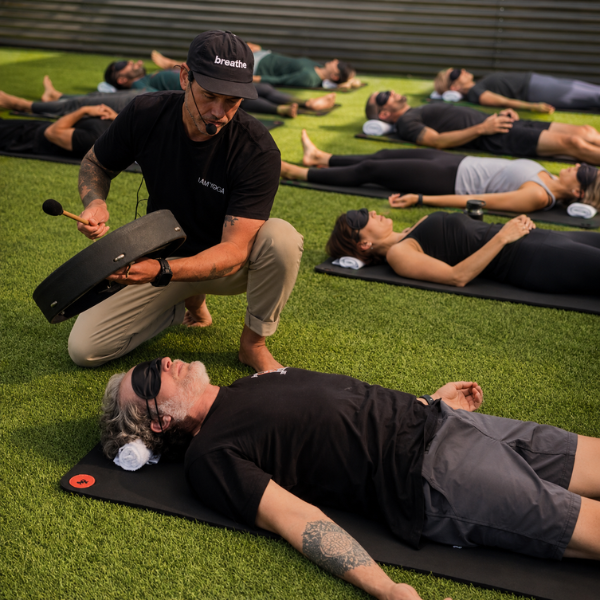
Here is what separates training from hoping: feedback.
The best everyday window into your vagus is heart rate variability, or HRV. It is the tiny variation in time between your heartbeats, and higher HRV generally reflects stronger vagal activity and better recovery. Slow, paced breathing has been shown to raise HRV and improve how the whole system self-regulates (Lehrer and Gevirtz, 2014).
Most modern wearables track HRV. Watch yours over a few weeks as you add these practices. You are not chasing a perfect number. You are watching a trend. When your baseline climbs, your nervous system is getting more resilient. That is the scoreboard.
One honest note, because this audience appreciates it. You do not have to buy into any single grand theory of the vagus nerve to benefit here. The debates in the research world are real. But the basic physiology, that slow breathing, cold, and heat shift your body toward recovery and you can measure it, is well established and repeatable. Stand on the parts that hold.
The bridge
I did not come to this work as a scientist. I came to it flat on my back, out of options, trying to find my way out of a dark stretch of my life. Breath is what pulled me up. The nerve is what made it make sense.
The vagus nerve is the physical bridge between your body and your mind, and if you ask me, something even deeper than that. It is the wire that carries the message home: you are safe, you can rest, you can begin again.
You do not have to overhaul your life to feel it. Two minutes of long exhales. A cold splash. A hum in the car. A little heat, then stillness.
Small reps. Every day.
Train the nerve, and nothing feels quite the same.
Special Offer for Hack Your Health Readers: Want to know where your vagus nerve stands right now? Take my free Vagal Tone Breath Test, a simple one-minute self-assessment that gives you a baseline you can actually track. Grab it here
References
- Berthoud, H.R. and Neuhuber, W.L. (2000). Functional and chemical anatomy of the afferent vagal system. Autonomic Neuroscience: Basic and Clinical, 85(1-3), 1-17.
- Balban, M.Y., Neri, E., Kogon, M.M., et al. (2023). Brief structured respiration practices enhance mood and reduce physiological arousal. Cell Reports Medicine, 4(1). https://www.cell.com/cell-reports-medicine/fulltext/S2666-3791(22)00474-8
- Lehrer, P.M. and Gevirtz, R. (2014). Heart rate variability biofeedback: how and why does it work? Frontiers in Psychology, 5, 756.
- Laukkanen, T., Khan, H., Zaccardi, F. and Laukkanen, J.A. (2015). Association between sauna bathing and fatal cardiovascular and all-cause mortality events. JAMA Internal Medicine, 175(4), 542-548.

About the author
Michael Thomas is the creator of The Vagal Method, a system for resetting the vagus nerve through breath, heat, and cold. A former Wim Hof Method instructor, he is the founder of Plunsana, a nervous system performance studio in St. Petersburg, Florida, where he has guided more than 5,000 people through live nervous system resets. His work translates the science of vagal tone into simple daily practices anyone can use to improve their stress, sleep, mood, and recovery.