


Author: Robin Switzer
I gave up coffee three years ago. Recently, I discovered a caffeine metabolite that gives me a little boost in energy and mental clarity—without the way caffeine makes me feel.
I stopped drinking coffee about three years ago.
I didn’t set out to give it up completely. I had just reached the point where I realized caffeine didn’t make me feel particularly good. Instead of giving me clean energy, it left me feeling overstimulated and jittery.
There was something else I had started noticing, too.
Coffee had become a vehicle for cream and sweetener.
When I started intermittent fasting, I began drinking my coffee black. And once all the extras were gone, I realized I really didn’t care that much about the coffee itself.
Eventually, I stopped drinking it altogether.
These days, I might have a cup of decaf once every six months—if that.
So when I discovered paraxanthine, I was interested.
My Experience With Paraxanthine
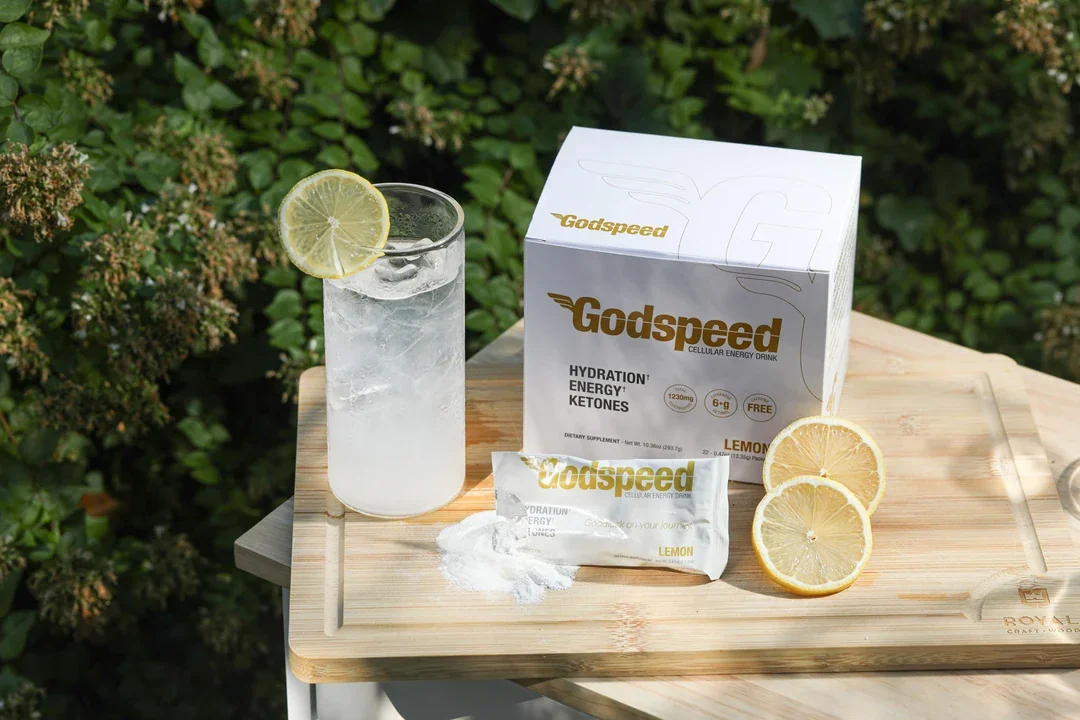
About six months ago, I started using a product that combines electrolytes, ketones, and paraxanthine.
I wasn’t necessarily looking for a caffeine replacement. I was simply trying the product.
But I noticed something.
I get a little boost in energy and a noticeable sense of mental clarity when I use it. It’s not the kind of energy where I suddenly feel like I need to run around and accomplish 15 things. It’s subtle.
And unlike my experience with caffeine, I don’t get the jitters at all.
That made me curious.
What exactly is paraxanthine, and why was I responding to it differently than I did to caffeine?
So I started digging into the research.
It Turns Out Your Body Already Makes It
Here’s the part I found fascinating.
Paraxanthine isn’t some completely foreign stimulant. It’s the primary metabolite your body produces when it breaks down caffeine.
Research suggests that roughly 80% of caffeine metabolism occurs through the pathway that produces paraxanthine.
In simple terms, when you drink caffeine, your body eventually turns much of it into paraxanthine.
Researchers are now studying what happens when we consume paraxanthine directly.
And that’s where things get interesting.
What Does the Research Say?
The human research is still limited, and I think that’s important to say upfront.
But some of the early findings are intriguing.
Small randomized controlled trials have found improvements in measures of attention, memory, reaction time, and cognitive performance after consuming paraxanthine. One study tested doses ranging from 50 to 200 mg, while another directly compared 200 mg of paraxanthine with 200 mg of caffeine.
A 2026 study caught my attention because researchers compared caffeine and paraxanthine and also looked at sleep. Conditions containing caffeine were associated with poorer subjective sleep quality, while paraxanthine alone produced more favorable sleep-related results. It was a very small study—just 14 male rowers—and sleep was measured subjectively, so I wouldn’t draw big conclusions from it yet.
But for someone like me who doesn’t tolerate caffeine well, it’s certainly interesting.
Does Paraxanthine Mean Energy Without the Jitters?
This is where I want to separate my experience from what the science actually shows.
I can tell you that I don’t experience the jittery feeling with the product I’m using. I get a subtle lift in energy and mental clarity, and I like how I feel.
But that doesn’t mean everyone will respond the same way.
Paraxanthine is still a stimulant. In controlled human research, both caffeine and paraxanthine have produced physiological effects, including increases in diastolic blood pressure and epinephrine under certain conditions.
So I wouldn’t tell someone who is sensitive to caffeine that paraxanthine automatically solves the problem.
What I would say is that it’s worth knowing about.
What I’ve Been Using
The product that introduced me to paraxanthine is Godspeed, a powdered drink that combines paraxanthine with BHB ketones, electrolytes, and several other ingredients.
I’ve been drinking it for about four months now, and it has become part of my morning routine. I genuinely enjoy it. For me, the energy is subtle, I notice better mental clarity, and—most importantly given my history with caffeine—I don’t experience the jitters.
I do want to make an important distinction, though. Godspeed contains more than paraxanthine, so I can’t say that paraxanthine alone is responsible for everything I experience when I drink it. I actually think it is the unique combination of ingredients that makes such a a big difference.
I’m not an affiliate for Godspeed, and I don’t receive a commission if you purchase it. I’m sharing it because it’s the product I’ve actually been using and the reason I started looking more closely at paraxanthine.
If you’re curious about the product and want to see the full ingredient list, you can learn more directly from Godspeed.
For now, paraxanthine remains in a category I find myself using quite a bit:
Interesting enough to keep watching—and, in my case, interesting enough to keep using.
And for those of us who gave up caffeine a long time ago, maybe interesting enough to keep exploring.

References:
- Lelo A, Birkett DJ, Robson RA, Miners JO.
Comparative pharmacokinetics of caffeine and its primary demethylated metabolites paraxanthine, theobromine and theophylline in man. British Journal of Clinical Pharmacology. 1986.
This is useful for explaining how caffeine and paraxanthine differ pharmacokinetically, including the reported half-lives of 4.1 hours for caffeine and 3.1 hours for paraxanthine.
View the study on PubMed - Lelo A, Miners JO, Robson RA, Birkett DJ.
Quantitative assessment of caffeine partial clearances in man. British Journal of Clinical Pharmacology. 1986.
This is the source for the finding that an average of approximately 79.6% of caffeine was converted to paraxanthine in the study.
View the study on PubMed - Xing D, et al.
Dose-Response of Paraxanthine on Cognitive Function: A Double Blind, Placebo Controlled, Crossover Trial. Nutrients. 2021.
Twelve participants received placebo or 50 mg, 100 mg, or 200 mg of paraxanthine. Researchers reported effects on some measures of cognition, memory, reasoning, response time, and attention, with more consistent effects at 100 and 200 mg.
View the study on PubMed - Yoo C, et al.
Paraxanthine provides greater improvement in cognitive function than caffeine after performing a 10-km run. Journal of the International Society of Sports Nutrition. 2024.
This small randomized crossover trial directly compared 200 mg of paraxanthine with 200 mg of caffeine, placebo, and a combination of caffeine and paraxanthine in 12 trained runners.
View the study on PubMed - Bingol Diedhiou A, et al.
Comparative effects of caffeine and paraxanthine on rowing performance and sleep quality: a randomized crossover study. Journal of the International Society of Sports Nutrition. 2026.
This is the newest study and the one I especially like for our article. Fourteen male university-level rowers received caffeine, paraxanthine, caffeine + paraxanthine, or placebo. It looked at both performance and subjective sleep outcomes.
View the study on PubMed

Robin Switzer
Robin Switzer is the founder of Hack Your Health, an annual health and wellness event built around education, connection, and community. After beginning her own health journey more than 40 years ago, Robin created the event to bring together people who often felt isolated in their approach to nutrition and health. Today, she continues to grow Hack Your Health with a broader vision: creating a place where people can explore different approaches to wellness, connect with others, and become empowered, active participants in their own health.