Guest Contributor Series
At Hack Your Health, we believe some of the best health insights come from experienced practitioners, researchers, educators, and individuals whose personal experiences have led them to ask deeper questions about health. Through our Guest Contributor Series, we invite trusted voices from across the health and wellness community to share perspectives that encourage thoughtful conversation and empower readers to learn more.
This week, we’re sharing the deeply personal story behind Keto Is Key, an upcoming documentary from award-winning filmmaker Caroleen Moise and Emmy-winning producer Kyle Kesses. After losing his mother to glioblastoma just seven weeks after her diagnosis, Kyle’s search to understand cancer metabolism led him to the work of Dr. Thomas Seyfried at Boston College—and ultimately to Caroleen and a documentary that would bring their work together. Keto Is Key explores ketosis, fasting, metabolic health, and chronic disease through conversations with leading physicians and researchers, along with the stories of patients putting these approaches into practice.
Can You Believe How Many People We’re Going to Help?
In 2024, my mom was diagnosed with glioblastoma, the deadliest brain cancer there is. Within the next few days, I found the work of Dr. Thomas Seyfried at Boston College and began learning about the biology of cancer.
Even though my mom’s oncologist said she’d be gone within five months, my family and I, with access to Dr. Seyfried’s work, felt that we knew something the standard of care did not. Cancer is not a genetic disease. It’s a mitochondrial metabolic disease that depends on glucose and glutamine to survive. Decades’ worth of science had proven this. If we could just get her into ketosis and intermittently inhibit the uptake of glutamine, we could manage glioblastoma and keep her alive.
We weren’t dreaming. Others had done it. Pablo Kelly was still alive ten years after his own glioblastoma diagnosis. Den Stacey had completely reversed a stage four pulmonary tumor. Robin Fargus had done the same with stage four breast cancer that had metastasized throughout her body.
Ketogenic metabolic therapy.
Real people were using it to save their own lives.
The hard science was clear. Cancer cells can only survive with access to sufficient glucose and glutamine. Cancer treatment should be structured accordingly.
There were week-long stretches after my mom’s diagnosis when our family felt entirely convinced that we would help her manage glioblastoma. She would say to me, “First we’re going to beat this and then we’re going to make a documentary about it. Kyle, can you believe how many people we’re going to help?”
Seven Weeks
My mom not only had glioblastoma, but part of the tumor was in the thalamus, the main relay station for sensory and motor signaling, located immediately above the brainstem.
Within two weeks of diagnosis, she was confined to a chair. Within five, she had lost consciousness.
Two brain surgeries and a handful of ER visits later, my mom died. Seven weeks had passed since she was diagnosed.
We never had the opportunity to try metabolic therapy.
Just like that, my mother was gone.
The physical and emotional pain permeated every second of my days and nights for a long time. I started to feel anger, but toward no one in particular.
Then I had a dream.
My mom was in it. We ran toward one another, but I woke up the moment before we could embrace. I heard her voice again.
“Kyle, can you believe how many people we’re going to help?”
Trying to Understand the Biology
I kept reading Dr. Seyfried’s book, Cancer as a Metabolic Disease, and the science made so much sense. Here is the biology, as plainly as I can put it.
Innumerable inputs from our environment—carbohydrate-rich diets, high stress, polluted air, toxins in the water, lack of quality sleep—cause oxidative stress on the cells in our bodies. This can damage the mitochondria, which are responsible for so many critical functions, including using oxygen to generate ATP. Our bodies need ATP to do just about everything, from muscle contractions to nerve impulses to chemical synthesis.
When mitochondria become damaged to the point of dysfunction, the cell in which they live, in an attempt to remain alive, reverts to an ancient metabolic pathway called fermentation. The cell begins to ferment glucose, even though sufficient oxygen is available. This phenomenon is called the Warburg Effect, first observed in the early 20th century by the Nobel Prize-winning German scientist Otto Warburg.
Here in the 21st century, Dr. Seyfried’s lab at Boston College has published research that confirms the Warburg Effect and shows that cancer cells also ferment the amino acid glutamine. So we now know that cancer cells can only remain viable when they have sufficient access to glucose and glutamine.
Meeting Dr. Thomas Seyfried
I emailed Dr. Seyfried, shared how things had gone with my mom, and told him I wanted to learn more about his work. After just a few exchanges, we agreed that I would sit in on his class in the fall of 2024. The class was called Cancer as a Metabolic Disease.
In that room, I discovered that Dr. Seyfried is a gift to the scientific world. His skills meet at the rare intersection of deep biochemical acumen and rich interpersonal appeal.
He tells stories using some of the same words that put you to sleep in high school chemistry, but he uses them in a way that commands attention.
Mitochondrial function. Oxidative phosphorylation. Mitochondrial substrate-level phosphorylation.
Put into the context of cancer, the disease that’s killing more than 600,000 people in the U.S. every year, those terms start to sound like the difference between life and death.
As an Emmy-winning documentary producer, I brought my production equipment to Boston College, and we soon launched Dr. Seyfried’s official YouTube channel, Talking Cancer with Professor Seyfried.
Then Another Filmmaker Walked Into the Lab
Six months later, a filmmaker walked into his lab to interview him for her third documentary.
Caroleen Moise had won Best Director at the 2021 Culver City Film Festival for Defying All Odds, which chronicles Dr. Terry Wahls, who devised her own dietary intervention to reverse her multiple sclerosis.
I felt something deep inside me awaken when I spoke to Caroleen. I helped her with the shoot that morning and spoke with her on the phone while driving home the next night.
First she became my girlfriend, and then I became the producer of her documentary, Keto Is Key.
The Making of Keto Is Key
Caroleen had already conducted more than half a dozen interviews by the time I joined the project. Since then, we have filmed in Australia, Canada, India, Turkey, and across the United States.
Keto Is Key features a dozen of the most prominent physicians and researchers in the field of metabolism—including Dr. Dominic D’Agostino, who studies ketogenic therapy for neurological and oncological applications; Annette Bosworth, MD, who has spent her career on insulin resistance and fasting; and Sean O’Mara, MD, JD, whose protocol is reducing visceral fat and reversing chronic illnesses.
Each one of our experts advocates lowering blood glucose to reach the metabolic state of ketosis.
Along with their expertise, Keto Is Key features several of their patients, including a stage four cancer patient whose pursuit of ketogenic metabolic therapy sent her to the other side of the globe and eventually brought her back from one of the scariest prognoses imaginable.
We shot more than thirty hours with these doctors.
About ninety minutes of it will be in the film.
Can You Believe How Many People We’re Going to Help?
Had my mom survived glioblastoma, I don’t doubt that she and I would have worked together to bring this information to the millions of families who need it.
The deeper that Caroleen and I go into this work, the more I realize how similar my family is to every other family.
Parents, siblings, children, and grandparents across the globe are suffering from cancer, diabetes, heart disease, and neurodegeneration. What most of them don’t know, and what they are unlikely to learn from their physician, is that all of these diseases can be interrupted.
Keto Is Key shows us how.
—Kyle Kesses
Learn More About Keto Is Key
Keto Is Key comes out in early 2027.
If you or someone you love has been diagnosed with cancer, the Keto Is Key team has assembled the documents, interviews, books, and presentations Kyle wishes he had known about the day his mom was diagnosed.
Explore the Keto Is Key Reading List
If you’re more interested in following the film as it approaches release, you can follow @ketoiskeymovie on Instagram.
You can also pre-order Keto Is Key. Pre-order access includes the film as well as exclusive live Q&As with experts featured in the documentary, including Dr. Seyfried, Dr. D’Agostino, and others.
About Kyle Kesses

Kyle Kesses is the producer of Keto Is Key, the third documentary feature from director Caroleen Moise, due for release in 2027. The film explores how ketosis and fasting are being used to treat chronic illnesses, including cancer, diabetes, heart disease, and visceral fat burden.
Kyle’s path to the project began with loss. After his mother died of glioblastoma in 2024, he studied cancer as a metabolic disease under Dr. Thomas Seyfried at Boston College and launched the YouTube channel Talking Cancer, featuring more than a dozen conversations with Dr. Seyfried on the mitochondrial metabolic theory of cancer. The channel gained over 35,000 subscribers in six months and has become a resource for patients, families, and clinicians.
Earlier in his career, Kyle won an Emmy for the New York Yankees series Prospect Watch and coordinated character animation for the 360 film Armonia, which screened at Cannes and Tribeca in 2019.
About Caroleen Moise

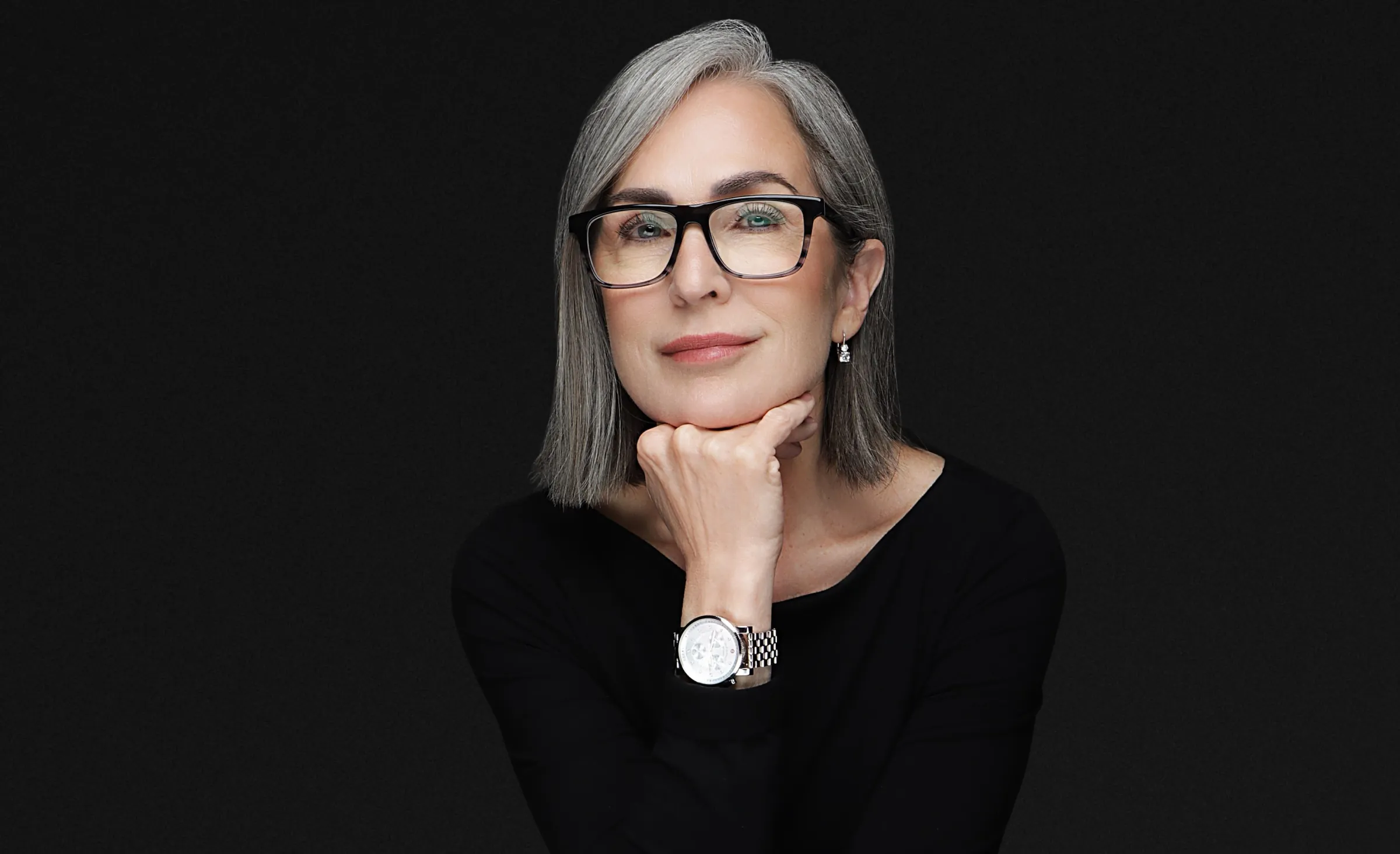
Caroleen Moise is an award-winning writer, producer, and director whose third documentary feature, Keto Is Key, is due for release in 2027. The film explores how ketosis and fasting are being used to treat chronic illnesses, including cancer, diabetes, heart disease, and visceral fat burden. It features 12 of the most prominent physicians and scientists in the field of metabolism, along with several of their patients who are implementing ketogenic protocols to reverse their disease.
Her previous documentaries have reached audiences worldwide. Her debut feature, We Love Paleo (2016), has been seen in over 60 countries, while Defying All Odds earned a Critics Choice Award at the Iowa Independent Film Festival and Best Director at the Culver City Film Festival.
A filmmaker since 2003, the Montreal native holds a Bachelor of Communications from UQAM and speaks several languages.