

By Dr. Sean O’Mara COL(R), MD, JD
Guest Contributor Series
At Hack Your Health, we believe some of the best health insights come from experienced practitioners who are helping people improve their health every day. Through our Guest Contributor Series, we invite trusted physicians, researchers, educators, and industry leaders to share evidence-informed perspectives that encourage thoughtful conversation and empower readers to make informed decisions about their health.
This week’s contributor, Dr. Sean O’Mara, brings a perspective that is truly his own. A physician, researcher, former U.S. Army Colonel, and longtime student of human performance, Dr. O’Mara has spent more than a decade studying the internal markers of chronic disease that aren’t always visible on the outside—including visceral fat, fat surrounding the heart, and fat within skeletal muscle. Using advanced imaging to objectively evaluate biological change, his work has evolved beyond the traditional question of how we treat disease to something much bigger: What becomes possible when we improve the biology of the human being?
In this week’s Journal, Dr. O’Mara shares the personal experience that changed the direction of his career and introduces his thinking around Executive Biology and Signal Biology—the idea that better health isn’t simply an end goal, but the biological foundation for how we think, perform, lead, communicate, and contribute.
For nearly three decades, I have been trying to make human beings better.
For roughly the first ten years, I approached that goal the way physicians are trained to approach it: I treated disease.
Then something happened that fundamentally changed the direction of my life.
I became the patient.
Despite practicing in one of the most scientifically demanding professions in the world—and having access to modern medicine, medications, testing, procedures, and specialists—I watched chronic disease progress in my own body.
My performance was deteriorating. My appearance was changing. My memory was worsening. I could not process information as effectively as I once had, and my physical capacity was declining.
It felt entirely different when chronic disease was no longer something I treated in other people.
It was progressing in me.
That experience forced me to confront an uncomfortable realization: Treating disease and creating health are not the same thing.
That distinction has shaped virtually everything I have done for the last 18 years.
I Was Treating Disease While Losing My Health
Modern medicine is extraordinarily capable in many areas. If you are injured, bleeding, infected, obstructed, acutely ill, or in need of a lifesaving procedure, there is no period in human history in which I would rather be alive.
Chronic disease presented me with a different problem.
I could treat it. I could monitor it, prescribe for it, and explain it. Yet I was still getting worse. Eventually, I began asking a question I had never really been trained to ask:
What does a human being look like biologically when that person is actually becoming healthier—not simply having a disease managed?
That question changed everything.
The Scale Cannot Show Us the Entire Picture
Over time, I became increasingly interested in structural signs of chronic disease that we could actually see through imaging. One of these is visceral adipose tissue, or VAT: fat stored deep within the abdomen around the internal organs.
Another is epicardial adipose tissue, or EAT: fat located immediately around the heart.
I also began studying the deterioration of skeletal muscle quality, including myosteatosis—the accumulation of fat within and around skeletal muscle.
These internal changes cannot always be identified by looking at someone’s weight, body mass index, or waist measurement. In the Framingham Heart Study, researchers used CT imaging to measure visceral fat in more than 3,000 people. Higher amounts of visceral fat predicted future cardiovascular disease even after researchers accounted for BMI and conventional risk factors.[1]
Another Framingham analysis connected visceral fat with markers of inflammation and oxidative stress beyond what BMI or waist circumference alone could explain.[2]
Two people can therefore have similar weights and waist measurements while having very different biology beneath the surface.
This is why conversations about health should go beyond asking, “How much does this person weigh?”
We should also be asking:
- Where is the fat stored?
- What structures is it surrounding?
- What is happening to the muscle?
- Is the person becoming more or less physically capable?
These questions give us a much higher-resolution view of human health.
The Fat Around the Heart Is Not Just Sitting There
Epicardial adipose tissue is especially fascinating because of where it is located.
It lies directly against the heart, without a fascial barrier separating it from the underlying heart muscle. It has normal physiological functions, but problems may arise when it becomes excessive or biologically dysfunctional.
A major review in Nature Reviews Cardiology describes epicardial fat as metabolically active tissue capable of releasing inflammatory and profibrotic signals. The review also discusses its involvement in coronary artery disease, atrial fibrillation, and heart failure.[3]
This changes how we should think about excess fat. Fat is not simply extra weight being carried around. Its location, characteristics, and metabolic activity matter.
Muscle Quality Matters Too
We should not focus exclusively on whether someone has enough muscle. We should also consider the quality of that muscle.
Myosteatosis is increasingly recognized as an important imaging feature. A systematic review of 73 studies associated myosteatosis with poorer outcomes and complications across numerous diseases. The researchers identified insulin resistance and systemic inflammation as possible mechanisms connecting unhealthy muscle composition with adverse outcomes.[4]
This has important implications for physical performance. In a randomized trial involving 160 older adults with obesity, researchers measured visceral and intermuscular fat using MRI while participants underwent weight loss and different exercise programs. Reductions in visceral and intermuscular fat correlated with improvements in physical performance, aerobic capacity, walking speed, and insulin sensitivity.[5] That does not prove that removing every trace of fat from muscle will automatically make someone a great athlete or executive.
However, it does show us that the body’s internal architecture contains meaningful information about health and performance that a bathroom scale cannot provide.
Even Subcutaneous Fat Is Not All the Same
Most people think of body fat in two categories: visceral fat on the inside and subcutaneous fat underneath the skin. The fascia of the abdomen separates subcutaneous fat into superficial and deep compartments, often called sSAT and dSAT.
Research has demonstrated structural and functional differences between these compartments. In men, deep abdominal subcutaneous fat was more strongly associated with insulin resistance and cardiovascular-risk characteristics, and some of its biological behavior resembled that of visceral fat.[6] This suggests that even the phrase “body-fat percentage” may be too simplistic when used by itself.
Not all fat is stored in the same place. Not all fat behaves the same way, and not all fat sends the same biological signals.
Health Should Be the Platform, Not the Destination
This may sound strange coming from a physician, but I no longer believe health should be the ultimate goal.
Health should be the platform.
What matters is what you can do with it.
Can you think clearly and make difficult decisions? Can you communicate effectively? Can you regulate your emotions and tolerate stress? Can you maintain your energy when everyone else is exhausted? Can you move well, solve problems, lead people, and make a greater contribution during the limited time you have?
These questions led me to an area I call Executive Biology: the application of biological optimization to human performance, leadership, and influence.
“Executive” does not refer only to someone sitting in a corporate boardroom. It refers to the executive capabilities of a human being: the ability to think, decide, act, communicate, withstand stress, and lead others.
A CEO needs those capabilities, but so does a physician, attorney, athlete, researcher, teacher, parent, entrepreneur, or anyone trying to accomplish something difficult.
All of those capabilities have biology beneath them.
The Signals We Send
Human beings constantly communicate biological information, often before a word is spoken. We notice one another’s facial appearance, posture, movement, voice, energy, responsiveness, body composition, and physical capability.
There is scientific support for the idea that appearance may contain information related to underlying biology. A review of facial-adiposity research found associations among perceived facial adiposity, attractiveness, and perceived health. Previous studies also connected facial adiposity with certain measures of cardiovascular and metabolic health.[7]
We should be careful not to overstate what this research proves. It does not establish that eliminating visceral fat directly changes someone’s face. Nor does it prove that reducing epicardial fat or improving muscle quality automatically makes someone more persuasive or influential.
Those questions require further investigation.
Nevertheless, we know internal fat distribution matters. We know muscle quality matters. We know metabolic health can affect physical function. We also know human beings perceive biological information in one another.
That raises a fascinating question: What happens to the signals a person sends when we substantially improve the biology producing them?
This is what I call Signal Biology.
We Have Been Approaching Leadership From the Neck Up
Enormous amounts of money are spent teaching leadership through books, coaching, seminars, retreats, communication training, psychological assessments, and productivity systems.
These resources can be valuable. But they generally begin with an assumption: the biology of the person being trained is simply the biology that person showed up with.
I do not believe we should automatically make that assumption.
What happens to decision-making when the decision-maker becomes biologically healthier?
What happens to confidence when someone becomes physically capable again? How do communication, resilience, presence, movement, and energy change?
Leadership science and human-performance research have barely begun to integrate these questions with medicine.
Five Questions to Ask About Your Biology
You do not need to become an imaging expert to begin thinking differently about your health.
Start by asking yourself:
- Am I measuring health only through weight and routine laboratory results?
These measurements can be useful, but they may not reveal where fat is stored or what is happening to muscle quality. - Am I becoming more physically capable?
Pay attention to strength, endurance, mobility, recovery, and your ability to perform ordinary physical tasks. - Does my daily life support healthy muscle and body composition?
Examine the quality of your food, physical activity, resistance training, sleep, stress, recovery, and relationship with heavily processed foods. - Is my biology helping or limiting my performance?
Consider your energy, mental clarity, emotional regulation, confidence, and ability to remain effective under pressure. - What would improved health allow me to contribute?
A powerful reason for change often extends beyond losing weight or improving a laboratory value. Think about the spouse, parent, professional, or leader you could become if poor health were no longer interfering.
Give People a More Powerful Reason to Change
We already know there are many things people could do differently.
They could improve how they eat, move, sleep, build muscle, recover, and manage stress. They could change their relationship with processed food and take better care of their microbiome.
Yet most people change only a few things.
I do not believe the explanation is always laziness. Many people have never been given a sufficiently powerful reason to reorganize their lives.
The possibility that a knee might hurt less, a laboratory number might improve, or ten pounds might disappear may not be enough.
But what if improving your biology changes the quality of the person you bring into every important interaction?
What if it helps you become a more capable spouse, parent, founder, physician, athlete, or leader?
Now the stakes are different.
What Will You Do With a Healthier Human Being?
When I come to Hack Your Health, I want to challenge the audience to think beyond the traditional health conversation.
Improve your glucose. Improve your body composition and muscle. Reduce unhealthy visceral fat. Care for your heart and microbiome. Address the chronic problems interfering with your life.
But do not stop there.
Ask a bigger question: What am I going to do with a better human being?
The purpose of improving biology should not simply be to produce a better laboratory report. It should help produce a more capable, effective, and resilient person.
Businesses are built through influence. Families are shaped through influence. Ideas spread, science advances, and cultures change through influence. Nearly everything meaningful that humans accomplish requires other human beings.
So do not come to Hack Your Health simply looking for another health hack.
Come asking: How much better could I become?
Then ask the harder question: What could I accomplish for other people if I became that person?
That is where I believe the next chapter of human optimization is heading—not simply hacking health, but improving performance, leadership, and influence by finally treating human biology as the foundation of all three.
Selected Scientific References
- Britton KA, Massaro JM, Murabito JM, et al. Body Fat Distribution, Incident Cardiovascular Disease, Cancer, and All-Cause Mortality. Journal of the American College of Cardiology. 2013;62(10):921–925. doi:10.1016/j.jacc.2013.06.027.
- Pou KM, Massaro JM, Hoffmann U, et al. Visceral and Subcutaneous Adipose Tissue Volumes Are Cross-Sectionally Related to Markers of Inflammation and Oxidative Stress: The Framingham Heart Study. Circulation. 2007;116(11):1234–1241. doi:10.1161/CIRCULATIONAHA.107.710509.
- Iacobellis G. Epicardial Adipose Tissue in Contemporary Cardiology. Nature Reviews Cardiology. 2022;19:593–606. doi:10.1038/s41569-022-00679-9.
- Ahn H, Kim DW, Ko Y, et al. Updated Systematic Review and Meta-Analysis on Diagnostic Issues and the Prognostic Impact of Myosteatosis: A New Paradigm Beyond Sarcopenia. Ageing Research Reviews. 2021;70:101398. doi:10.1016/j.arr.2021.101398.
- Waters DL, Aguirre L, Gurney B, et al. Effect of Aerobic or Resistance Exercise, or Both, on Intermuscular and Visceral Fat and Physical and Metabolic Function in Older Adults With Obesity While Dieting. Journal of Gerontology: Series A. 2022;77(1):131–139. doi:10.1093/gerona/glab111.
- Marinou K, Hodson L, Vasan SK, et al. Structural and Functional Properties of Deep Abdominal Subcutaneous Adipose Tissue Explain Its Association With Insulin Resistance and Cardiovascular Risk in Men. Diabetes Care. 2014;37(3):821–829. doi:10.2337/dc13-1353.
- de Jager S, Coetzee N, Coetzee V. Facial Adiposity, Attractiveness, and Health: A Review. Frontiers in Psychology. 2018;9:2562. doi:10.3389/fpsyg.2018.02562.

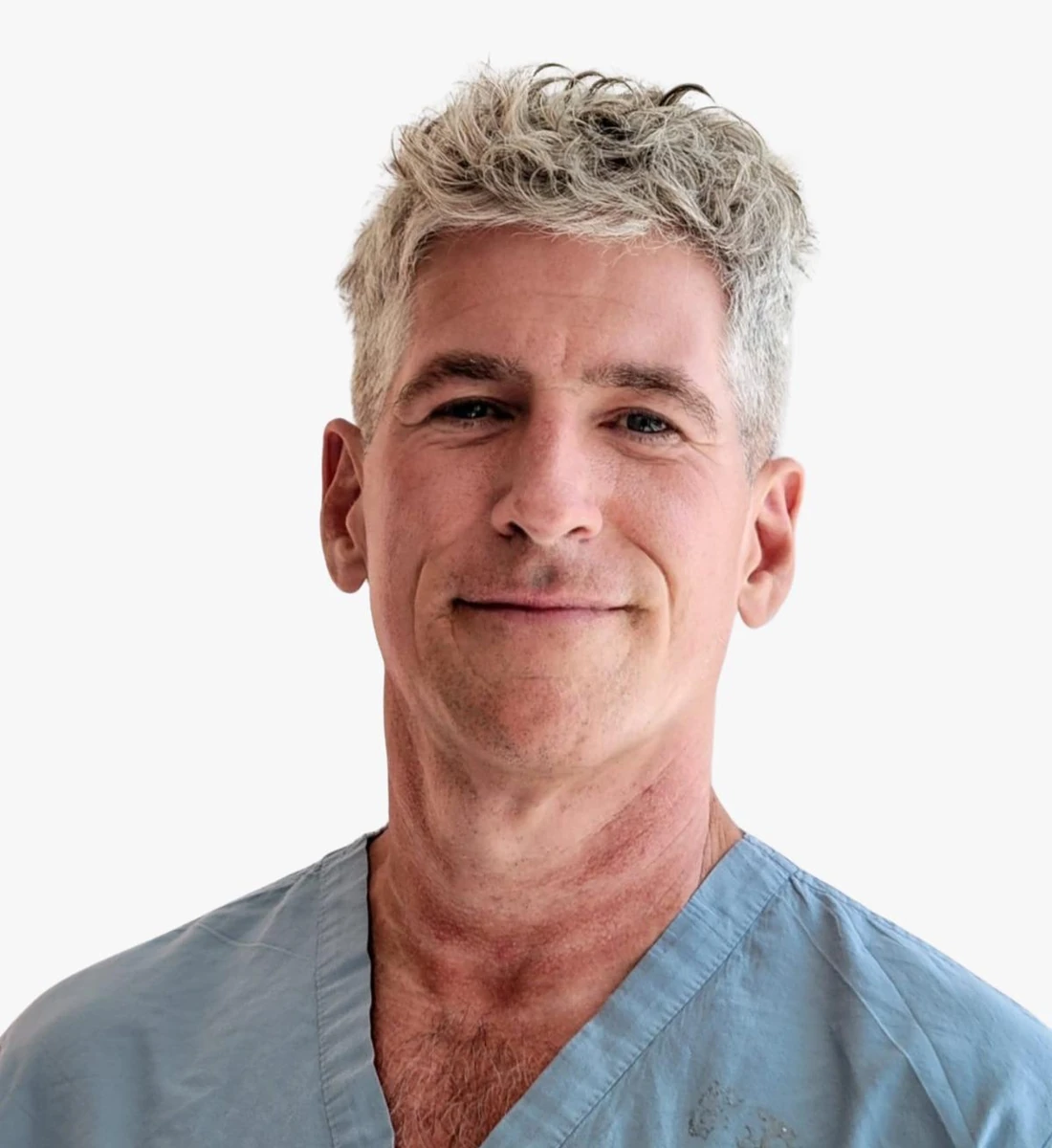
Dr. Sean O’Mara
Dr. O’Mara has over 13 years of full-time experience specializing in the targeted elimination of visceral fat, cardiac fat, and intramuscular fat. His work is defined by precision-guided, imaging-verified strategies that objectively demonstrate biological transformation. This expertise is exceptionally rare and a primary reason high-performance leaders specifically seek him out when precision and verified outcomes matter most. While Dr. Sean O’Mara is a fully licensed physician (MD) and researcher, he primarily serves clients as an executive biological consultant.